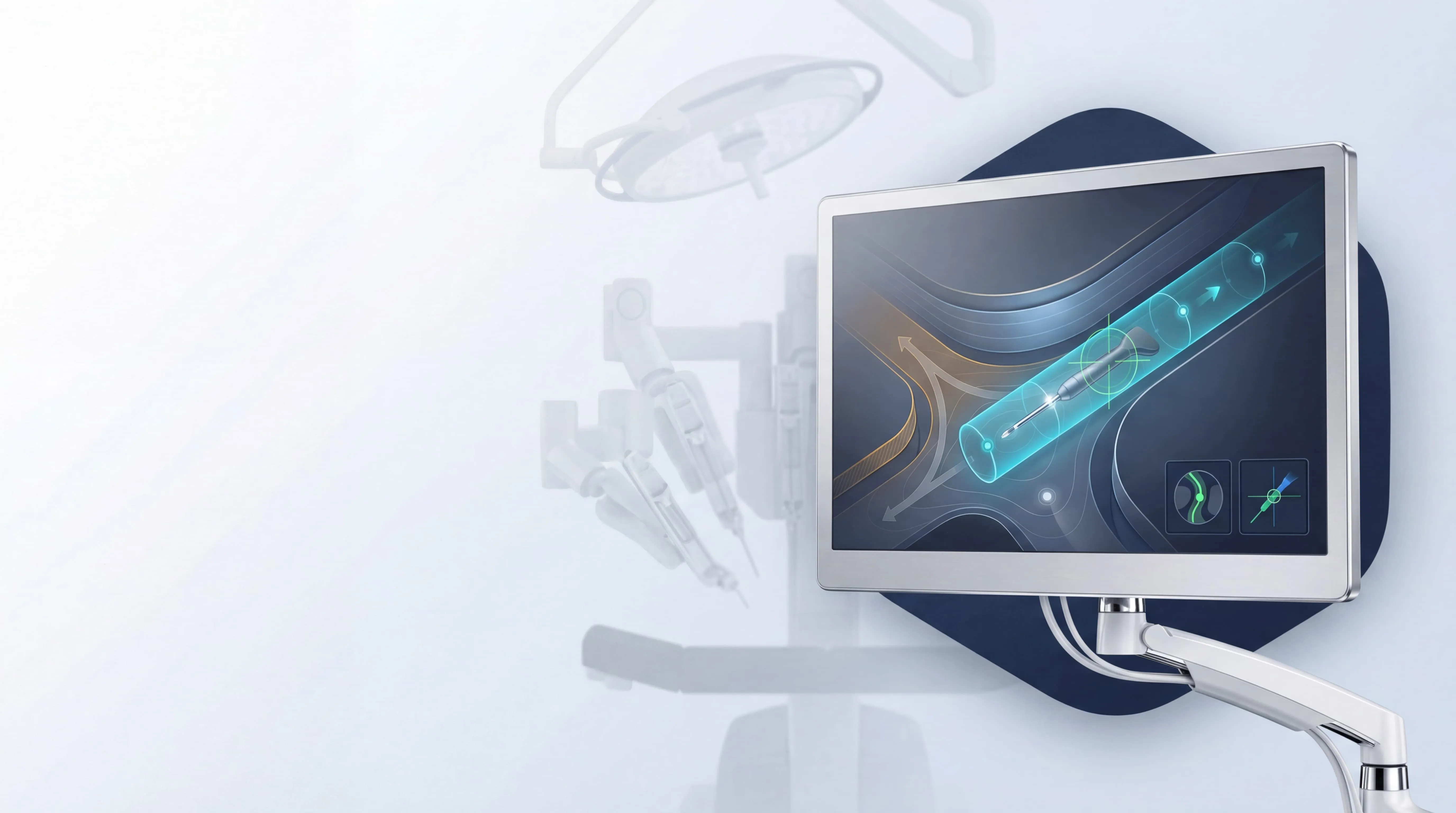
CardioVis AI Copilot
Operating-Room System Compatibility
Know the current step. Anticipate what comes next
Know the current step. Anticipate what comes next
CardioVis recognizes procedural phase and likely next steps from live video, then shares that context across the room so each role can prepare earlier and coordinate faster.
Current phase and confidence update continuously.
Teams receive early cues for likely transitions.
Standard video in, overlay output out.
CardioVis is built for compatibility. It reads standard video signals, runs on edge compute hardware that fits within existing OR infrastructure, and outputs to the displays your team already uses.
Accepts HD-SDI, HDMI, and IP video streams from any endoscope or robotic console — no proprietary connectors or adapters required.
All AI inference runs on a compact, medical-grade edge device that sits within the OR tower. No cloud connectivity is required for real-time operation.
Overlays can be routed to the surgeon's console, a wall-mounted OR display, or both simultaneously — giving every role in the room visibility into the procedural timeline.
Phase timings, transition logs, and prediction accuracy are stored locally and can be exported for post-case review, quality reporting, and longitudinal analytics.
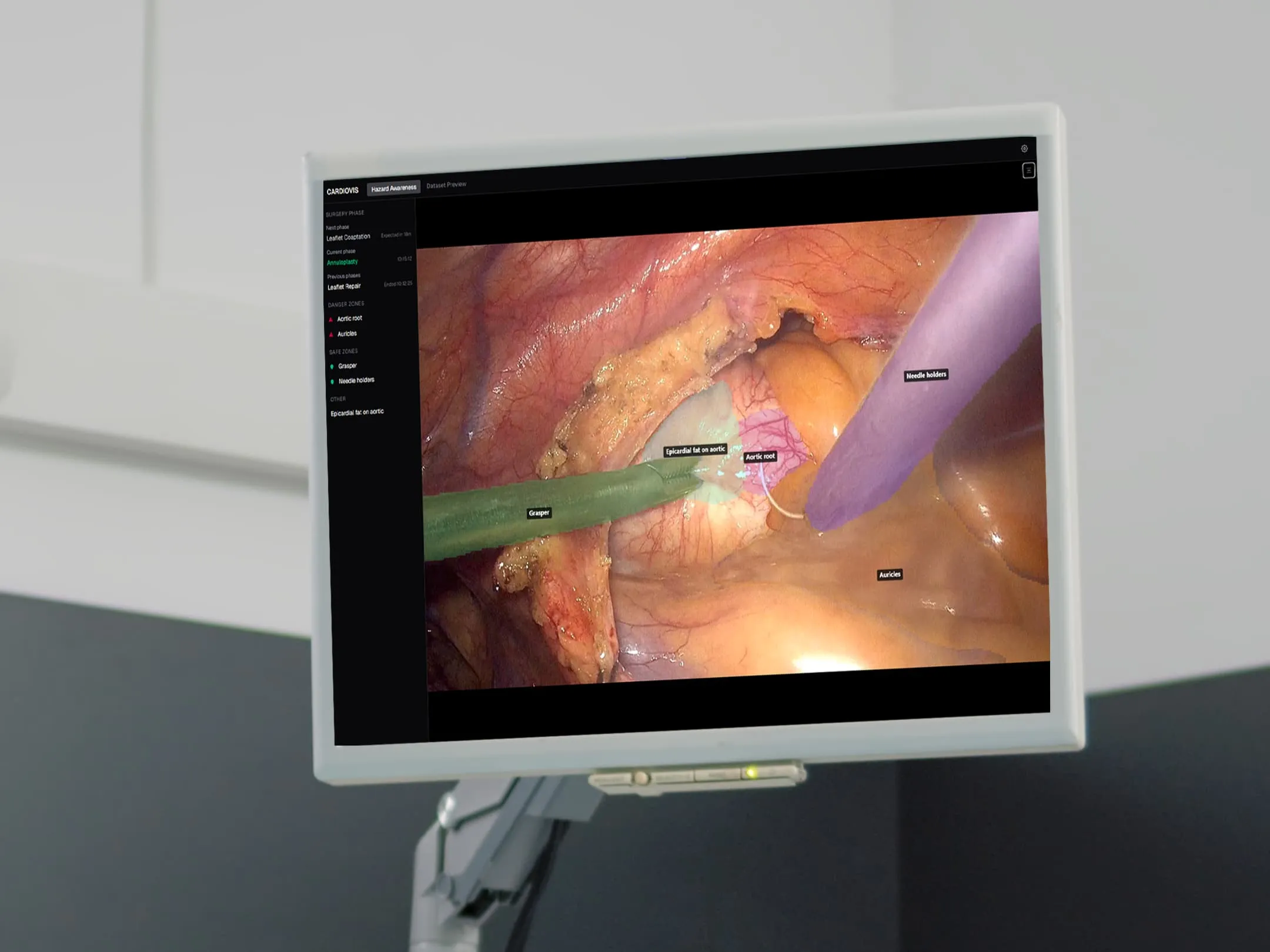
The scrub nurse sees the predicted next phase on the OR display and can pre-stage the next instrument tray — reducing hand-off delays and keeping the case moving smoothly.
Real-time phase progression data feeds into scheduling systems, giving OR managers an accurate picture of how far along each case is — enabling better room turnover planning and resource allocation.
New team members gain procedural context automatically through the phase display, reducing the need for verbal orientation mid-case and letting them contribute more confidently from their first day.